




Facing tax debt can be an overwhelming experience, but you don’t have to deal with it alone. At Wright Law Offices in Scottsdale, AZ, our dedicated tax debt attorneys bring years of experience and a deep understanding of IRS procedures to help you find effective solutions. Whether you’re dealing with personal, business, or payroll tax issues, our team is committed to providing personalized strategies tailored to your unique financial situation. We prioritize clear communication, making sure you’re informed every step of the way, and we work diligently to negotiate with tax authorities on your behalf. Trust in our proven track record to guide you toward financial stability and peace of mind.
Turn to our Scottsdale, AZ tax debt lawyer if you owe more money in taxes than you are able to afford. Our lawyer may be able to set up a repayment plan for you and negotiate the rate that you must pay. We can also determine your eligibility for tax relief programs. Contact us today to schedule a consultation.
Tips To Avoid Debt
If you are simply worried about tax debt, here are some tips to help you avoid it:
If you are a business or contractor, make quarterly estimated payments. These amounts are estimated by an accountant. Look at how much you owed in taxes last year and factor in other information, such as the rate at which your company is growing, to estimate what you will owe the next fiscal year. Then, divide this into four for the four quarters of the year, and create paperwork. Each quarter, you will make these payments to the government. Quarterly estimated payments are not required, but if not paid, can result in a fine. It is recommended that you make these in order to owe less in taxes at the end of the year.
Create a budget. Write down the goal for what you will make in a year. Factor in your current expenses, and then look up the general tax rate for your state — and don’t forget to verify what the federal tax rate for the year is. You can then use this to estimate what you will owe in taxes, at which point you can create a plan on what you need to save monthly to pay at the end of the year.
If you are employed for someone else, research what deductions you should claim in order to make sure the correct amount is being taken out of your paycheck so that you do not have to worry about owing taxes at the end of the year.

What to Do When Tax Debt Collection Goes to Court
Not paying your taxes can have serious consequences — including being taken to court where you will need the help of our Scottsdale, AZ tax debt lawyer on your case. Many people are unaware of the process that takes place when they are sued by tax debt collection agencies. To help, we’ve broken down what happens when tax collectors take you to court and how best to deal with it. Learn more about this process, and then contact our Arizona law practice for help.
Why Tax Debt Is So Difficult
Debt is one of the hardest things to get out of because it is so easy to lose control of how much you owe. This kind of debt can quickly spiral and you may have a more difficult time making payments when you owe larger amounts of money. Further, you may be surprised to find that the IRS can not only garnish your wages but also seize your property. That means that even if you were counting on your money for other things that you find necessary, you may suddenly have a difficult time paying for groceries or other bills.
While it is possible to speak with the IRS on your own, you may be cautious and nervous to do so. Many people are concerned about the IRS using scare tactics or making threats. When you work with our lawyer, we can negotiate on your behalf while educating you on what you can do to relieve your tax debt. Even though you may be intimidated speaking with someone from the IRS, our Scottsdale tax attorney can do this on your behalf.
Your Options For Dealing With Tax Debt
When you are dealing with tax debt, you have several routes you could go down. One thing our lawyer may recommend is filing for bankruptcy. If you are eligible for Chapter 7 bankruptcy, this can give you the chance to discharge all of your debts through liquidation. Additionally, if you are eligible for Chapter 13 bankruptcy, you have the opportunity to restructure your tax debt so that you can whittle away your debt through more affordable monthly payments. There are also some legal strategies for reducing your debt.
The First Step Is Receiving a Summons
When you owe back taxes, the IRS will usually send you notices via mail or email, warning you about your unpaid taxes and giving you a chance to pay up before legal action is taken against you. Once all other attempts fail, the IRS may issue a summons from the court that requires you to appear in person at a hearing in front of a judge or jury. Failing to appear will result in an automatic judgment in favor of the IRS and could even lead to jail time for contempt of court charges. It is important that if you receive this summons, you take it seriously and do not ignore your tax debt. Contact our tax debt attorney as soon as possible so that we can advise on how best to proceed with your case.
The Second Step Is Dealing with Your Tax Debt
At this point, our attorneys can negotiate on your behalf with the IRS regarding any outstanding payments due. This can include reducing the amount owed (known as an Offer in Compromise) or setting up an installment plan where payments are made over time until the full amount is paid off. In some cases, negotiating with the IRS may be easier than dealing with debt collectors since debt collectors do not always have authority over payment plans and compromise offers. However, if negotiations break down then there may be no choice but for the debt collector to take legal action against you.
The Final Step Is Resolving Your Tax Debt
If negotiations cannot be reached between yourself and your debt collector then you will need to appear in court for a hearing where both parties present their arguments as evidence before a judge or jury makes a ruling on whether or not any money is owed and how much should be paid by whom. It is important that when preparing for this hearing — with assistance from our attorney — you verify that all documents and evidence presented is accurate so that there is no room for dispute later on down the line. Once all evidence has been presented at court, then hopefully an agreement between both parties can be reached regarding repayment terms or even dismissal of any claims made against you by the debt collector.
No one wants to be taken to court by their tax collector because it can potentially put them in financial difficulty and could even lead them into prison if ignored completely. If ever faced with such a situation it is highly recommended that professional legal advice is sought out as soon as possible so that any potential issues arising from being sued by a debt collector can be resolved quickly and efficiently without further damage being done either financially or legally speaking. Our attorney works to achieve a result of either debt settlement terms being agreed upon or complete dismissal of any claims made against you altogether.
Top 6 Tips For Handling Your Tax Debt
Assess Your Current Situation
Taking stock of your financial standing is the first step to addressing tax debt. Look at your income, assets, and outstanding debts beyond your taxes. Knowing your financial situation helps us evaluate the most appropriate strategies for you. We recommend prioritizing secured debts, as failing to pay these can lead to asset forfeiture. Meanwhile, understanding your tax debt specifics—such as how much you owe and the associated penalties—helps us understand the way forward.
Organize Your Tax Documents
Having all relevant documents organized and accessible is essential for tackling tax debt effectively. This includes any past tax returns, notices from the IRS or state agencies, records of payments made, and any correspondence you’ve received. With these materials readily available, it’s easier to identify potential errors and discrepancies in your tax assessments, which could reduce the amount you owe. Clear and organized records allow us to build a stronger case for resolving your tax matters.
Consider Payment Plans
If you cannot pay your tax debt in full, payment plans might offer relief. The IRS and many state tax agencies provide payment options for qualifying individuals. For instance, you could opt for an installment agreement, which allows you to make monthly payments over a set period. Alternatively, some may qualify for a short-term payment arrangement if they can pay within a few months. These plans require approval from the IRS, and knowing the right one to apply for can save time and reduce added penalties.
Look Into Penalty Relief Options
In certain cases, taxpayers may be eligible for penalty relief. The IRS offers a few relief options that could reduce or remove some penalties related to late payments or filing errors. For example, first-time penalty abatement may apply if you meet specific criteria, such as having a good compliance history. There is also reasonable cause relief if you can demonstrate that unforeseen circumstances prevented timely filing or payment. Our Scottsdale tax debt attorney can guide you through the eligibility criteria and application process to determine if these options are viable.
Be Mindful Of Tax Liens And Levies
When tax debt goes unpaid, the IRS has the authority to place a lien on your property or levy your assets, which can significantly impact your financial stability. A tax lien is a claim on your property, while a levy allows the IRS to seize assets, including wages or bank accounts. Addressing your tax debt promptly can help you avoid these consequences. If a lien or levy has already been issued, we can help explore options to release or reduce the impact, keeping you informed of your rights and obligations.
Know When To Seek Legal Assistance
Addressing tax debt alone can feel overwhelming, but experienced legal guidance can ease the process. Our Scottsdale tax debt lawyers work closely with clients to explore all available options, including installment agreements, penalty relief, and other settlements. With us by your side, we’ll make sure you understand each step in managing your debt and help safeguard your financial future. When tax debt issues arise, knowing you have a reliable advocate on your side can make a significant difference.
If you’re ready to take control of your tax debt and regain financial stability, reach out to us today. With over a decade of legal experience, we’re here to provide straightforward and quality guidance tailored to your unique situation. Let’s discuss your options and help you get started on a clear path forward.
Scottsdale Tax Debt Infographic

Scottsdale Tax Debt Statistics
Tax debt remains a significant challenge for the U.S. government, with the Internal Revenue Service (IRS) actively pursuing various collection strategies to address unpaid taxes.
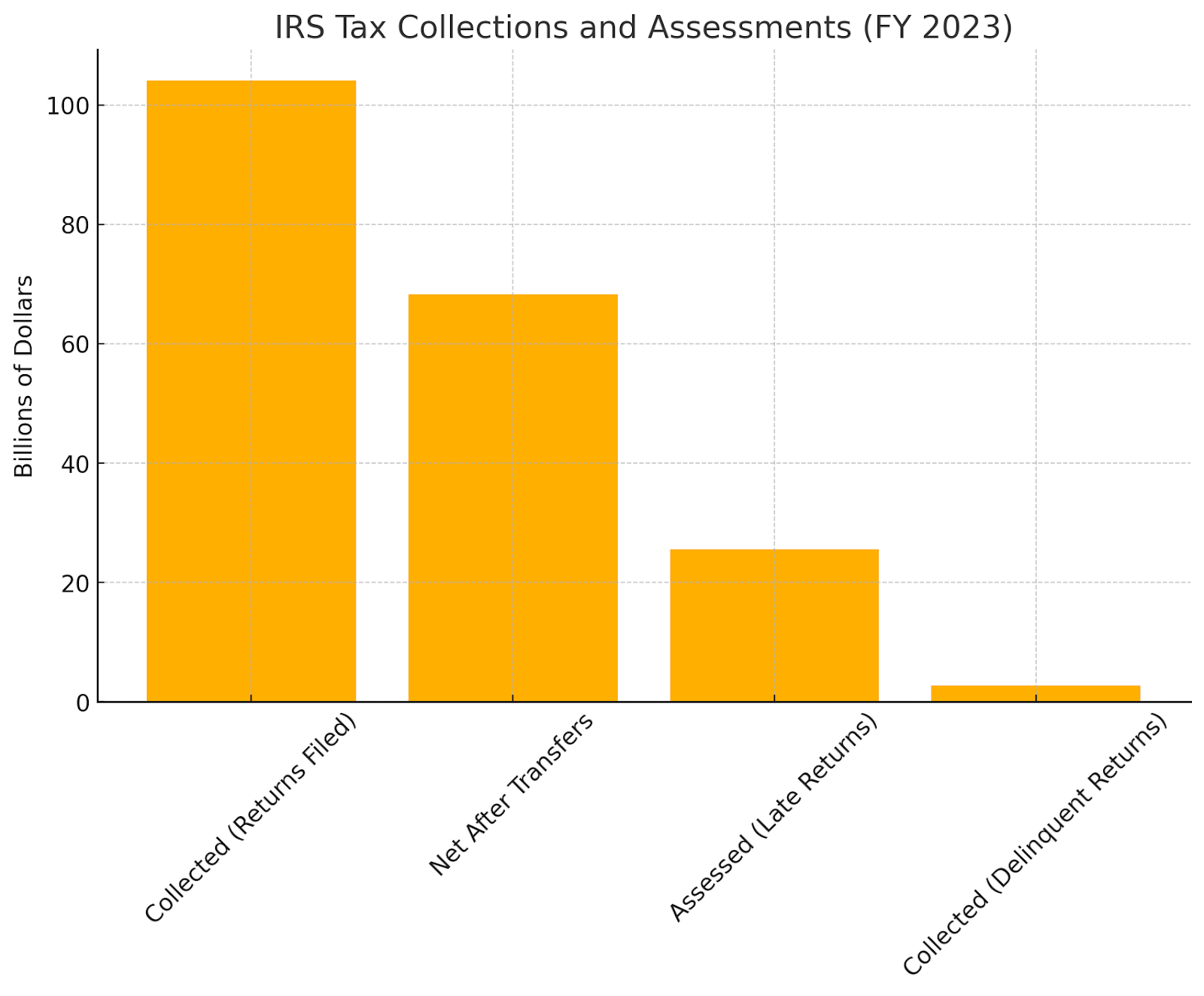
In Fiscal Year (FY) 2023, the IRS collected over $104.1 billion in unpaid assessments on returns filed with additional tax due, netting about $68.3 billion after credit transfers. Additionally, the IRS assessed more than $25.6 billion in additional taxes for returns not filed timely and collected almost $2.8 billion with delinquent returns.
To address tax delinquencies, the IRS employs several tools, including installment agreements, offers in compromise, and enforced collection actions. In FY 2023, taxpayers established nearly 2.7 million new installment agreements and paid $14.4 billion toward all installment agreements. Moreover, the IRS accepted 12,711 offers in compromise, amounting to $214.5 million during the year.
The IRS has also intensified efforts to collect from high-income individuals. As part of compliance initiatives, the agency has surpassed the $1 billion mark in collections from millionaires with past-due taxes. Specifically, the IRS targeted 1,600 individuals with incomes over $1 million who each owed more than $250,000 in recognized tax debt, resulting in significant recoveries.
Despite these efforts, the tax gap—the difference between taxes owed and taxes paid on time—remains substantial. The IRS projected the gross tax gap at $696 billion in 2022, with a net tax gap of $606 billion after late payments. The majority of unpaid taxes (77%) resulted from underreporting income or overstating deductions and credits.
Scottsdale Tax Debt FAQs
Tax issues can be stressful and overwhelming, especially when dealing with debt owed to the IRS or state tax authorities. If left unresolved, they can lead to long-term financial strain and significant consequences. Many people need clarification about their rights and options, which is why having access to clear information can make a big difference. We’ve compiled some of the most common questions and answers to provide clarity and guidance for those facing tax challenges.
What Does A Tax Debt Lawyer Do To Help With Unpaid Taxes?
Our tax debt lawyers help individuals and businesses address unpaid taxes by reviewing your specific situation and identifying the most effective solution. This could involve negotiating payment plans, reducing penalties, or exploring options like Offers in Compromise. We analyze your financial situation to determine what relief programs you may qualify for and ensure that all necessary documentation is prepared and submitted correctly.
Can A Tax Debt Lawyer Stop IRS Collections Or Wage Garnishments?
Yes, we can take steps to halt aggressive collection actions such as wage garnishments, bank levies, or property liens. By engaging with the IRS and using available legal tools, we aim to protect your assets and income while resolving the underlying debt. For example, we might file for a Collection Due Process hearing or secure a temporary hold on collections while working on a resolution. Quick action is often essential to prevent further consequences, and we prioritize creating a strategy that minimizes disruption to your life and finances.
Is It Worth Hiring A Tax Debt Lawyer If My Debt Is Small?
Even with smaller debts, the consequences of unpaid taxes can escalate over time. Interest and penalties can compound quickly, turning a manageable amount into a much larger issue. Our Scottsdale tax debt lawyers can resolve matters more efficiently, saving you time and stress in the process. In many cases, addressing the issue early can prevent it from becoming a larger financial burden or impacting your credit score and financial future.
How Long Does It Take To Resolve Tax Debt?
The timeline for resolving tax debt varies depending on the details of the case and the solution pursued. Some cases may be resolved in a matter of weeks, while others can take months. Our goal is to work as efficiently as possible while ensuring all steps are handled thoroughly and correctly.
Will Working With A Tax Debt Lawyer Reduce What I Owe?
While we can’t guarantee a reduction in the amount owed, there are situations where penalties and interest can be reduced or eliminated. Our Scottsdale tax debt lawyers will explore all avenues to achieve the best possible outcome for you, including penalty abatement and other relief options. Every case is unique, and we take the time to understand your situation fully before recommending a course of action.
When tax debt issues arise, it’s important to take action promptly to avoid further financial and legal complications. Delaying can lead to more severe consequences, including increased debt and more aggressive collection efforts. Focusing exclusively on bankruptcy law, our team is here to provide straightforward solutions and clear communication every step of the way. If you’re struggling with tax debt, we encourage you to reach out today for a free consultation. Let us help you move forward with confidence and peace of mind, knowing you have a dedicated partner by your side.
Scottsdale Tax Debt Glossary
Our Scottsdale, AZ tax debt lawyer understands that when you’re facing IRS collection efforts or struggling with back taxes, understanding the legal language used in tax debt relief can make a major difference. Whether you’re reviewing options with our bankruptcy lawyer or researching ways to protect your income and assets, having a grasp of common legal terms can help you feel more confident and informed. Below are several important terms and phrases that often arise in tax debt cases, explained in practical terms.
Tax Lien
A tax lien is the government’s legal claim against your property due to unpaid taxes. This claim is public record and attaches to everything you own, including your home, vehicles, financial accounts, and any future assets you acquire while the lien is in effect. The IRS files a Notice of Federal Tax Lien to alert creditors that it has a legal right to your property, which can make it extremely difficult to sell or refinance major assets. Although a lien does not result in immediate property seizure, it can severely impact your credit score and financial flexibility. Working with our tax attorney can help you address the lien and negotiate a resolution.
Tax Levy
A tax levy is different from a lien in that it involves the actual seizure of your assets to satisfy a tax debt. This is one of the IRS’s most aggressive collection tools. With a levy, the IRS can garnish your wages, freeze your bank accounts, or take and sell your property. Levies are typically the result of unpaid taxes that have gone unresolved for a significant period, and they usually follow several warning notices. If you’ve received a Final Notice of Intent to Levy, acting quickly is critical. Our lawyer can help you explore defenses or alternatives, such as filing for a hearing or negotiating a payment plan.
Offer In Compromise
An Offer in Compromise (OIC) allows qualified taxpayers to settle their debt with the IRS for less than the full amount owed. This option is typically considered when it’s unlikely the full tax debt can be collected and paying it in full would create financial hardship. The IRS reviews your income, expenses, assets, and ability to pay before accepting an OIC. While it can be a valuable path to debt relief, approval is not guaranteed, and the application process is detailed and time-sensitive. Our skilled legal professionals can help prepare and submit a compelling offer that maximizes your chances of acceptance.
Installment Agreement
An Installment Agreement is a formal plan with the IRS that allows you to pay off your tax debt in regular monthly installments. This can be a helpful solution if you can’t afford to pay the balance in one lump sum but can manage smaller payments over time. The IRS offers several types of installment agreements, including streamlined, guaranteed, and partial payment plans. Missing payments can result in a default, so it’s important to negotiate terms that realistically fit your financial situation. Our Scottsdale tax lawyer can evaluate your eligibility and advocate for a plan that avoids future penalties or collection actions.
Penalty Abatement
Penalty abatement is the process of requesting the reduction or elimination of IRS penalties that have been added to your tax bill. These penalties often stem from late filing, late payment, or failure to deposit employment taxes. The IRS may grant relief if you can demonstrate reasonable cause, such as illness, a natural disaster, or other circumstances beyond your control. First-time abatement may also be available if you have a clean compliance history.
Wright Law Offices, Scottsdale Tax Debt Lawyer
7135 E Camelback Rd, Scottsdale, AZ 85251
Read more of our Google reviews and let us know how we can help you with your legal issues.
Take Control of Your Tax Debt Today
Don’t let tax debt dictate your future. The longer you wait, the more challenging it becomes to resolve. At Wright Law Offices, our Scottsdale-based tax debt lawyers are here to assess your situation and outline the best course of action, whether that involves setting up a manageable repayment plan, exploring tax relief programs, or considering Chapter 13 or Chapter 7 bankruptcy options. Our commitment to professionalism and client education means you receive the support and knowledge needed to make informed decisions. Reach out today for a free consultation and take the first step toward regaining control over your financial well-being.